

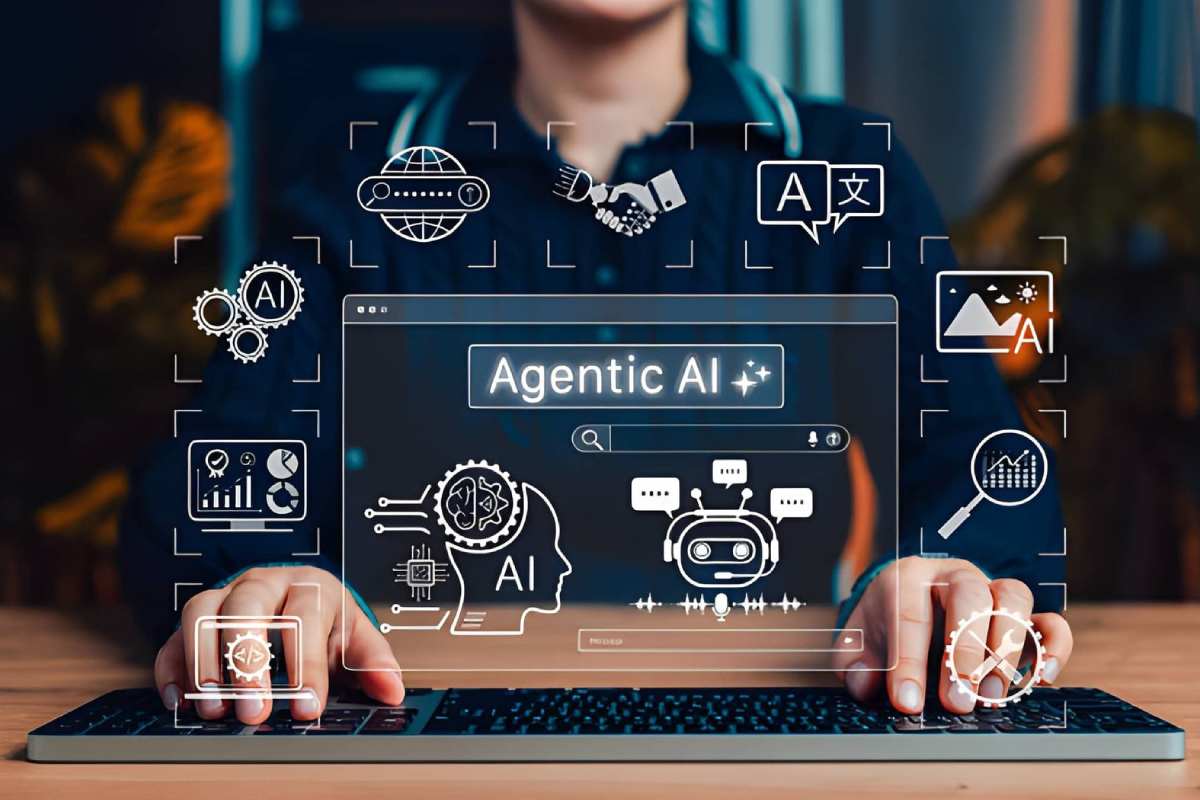

In every company, some workflows look functional on paper but actually take up time and money and reduce productivity ‘Agentic AI’. For example, a purchase approval requires 11 steps instead of 4. Or a situation where a customer is in line, and three departments are waiting for their turn. Or conformance checking that requires manual analysis every time, even if 90% of the cases are identical.
These are not exceptions. This is the norm for organisations that have invested significant resources in automation over the past decade, only to find that automation alone isn’t enough.
The tools have changed, but the bottlenecks remain.
This is where agentic AI comes into play, and why companies developing it are becoming key partners for enterprises looking to go beyond mere efficiency and achieve real operational change. A competent AI development company contributes much more than just technical execution. It allows you to identify where exactly in workflows the intelligence should be located and how to create systems capable of acting accordingly.
In this blog, we’ll explain how agentic AI is transforming the approach to business process design and execution. You’ll learn where traditional automation falls short, which workflows benefit most, and how development partners foster real, controllable transformation.
Why is traditional workflow automation reaching its limits?
Robotic process automation (RPA) and rule-based workflow management tools have delivered real benefits. They eliminated repetitive manual tasks, reduced human error in structured processes, and reduced cycle times in predictable environments.
But they were designed for a world where inputs are precise, rules are fixed, and exceptions are rare.
In most companies, such a world does not exist.
According to McKinsey, only 16% of organizations report that their digital transformation and transformation using AI have improved performance and maintained these improvements over time. One of the key reasons is that many automation systems fail in the face of the variability inherent in business processes: vendor contracts that don’t conform to standard templates, customer requests that span multiple product lines, and regulatory requirements that change from quarter to quarter.
When situations like this arise, traditional automation generates an error, redirects everything in the queue to a human, or handles something incorrectly without warning. Neither of these results is acceptable when scaling up.
Another problem is integration. Most companies use between 8 and 15 core systems, and automation tools typically only work within one or two of them. There is no interconnection between the systems. They don’t make decisions. And, of course, not learn.
agentic AI has a completely different architecture.
What is Agent AI transforming business process design?
Agentic AI systems don’t just perform steps; they are also learning. They chase goals.
You determine the outcome. The agent determines what needs to happen, in what order, and with which tools, and adjusts the process in real time based on the data received. This is fundamentally different from script-based automation, where every route is predefined.
Here’s what this change looks like in practice:
| Capability | Traditional Automation | Agentic AI |
| Decision-making | Rule-based, binary | Context-aware, multi-variable |
| Exception handling | Escalates to human or fails | Attempts resolution, escalates selectively |
| Multi-system coordination | Limited, often siled | Native, spans systems and APIs |
| Learning over time | Static | Improves with feedback loops |
| Scope of tasks | Narrow, well-defined | Nation, goal-oriented |
The practical implication is that AI with managerial capabilities can perform tasks that automation could never solve: tasks that require decision-making, not just execution.
This includes synthesising information from multiple sources before making a recommendation, managing multistep processes in which the next step depends on the results of the previous one, and coordinating actions across teams and systems without human intervention at each step.
The strategic role of AI development companies with managerial capabilities
Developing agentic AI capabilities for business processes is not just a software project. It is an architectural decision with implications for security, regulatory compliance, operational activities, and organisational design.
Most internal teams are not ready for this. They clearly understand the business problems, but they lack the infrastructure and pattern knowledge needed to build efficient, scalable systems. This disadvantage proves costly when it manifests during the implementation phase.
An experienced AI development company with management capabilities provides three elements that an in-house team usually cannot quickly replicate:
- Intelligent mapping of workflows. Before writing a single line of code, the right partner will identify the workflows with the greatest cognitive complexity, the most exceptions, and the highest return on investment from autonomous decision-making. Not all workflows are suitable. Those that require the correct sequence are suitable.
- Architecture for trust and control. Enterprise systems with agents require audit logs, escalation logic, role-based controls, and security conditions laid out from the start. Adding them after implementation is much more expensive than designing from scratch.
- Depth of integration. True workflow transformation requires connectivity to the systems where work is done, including ERPs, CRMs, HRIS platforms, document management systems, and proprietary internal tools. It’s not as simple as plug-and-play. Experience with business APIs, data contracts, and access control templates is required.
Organisations that treat agentic AI as a development problem typically release systems that work in demonstrations but fail in production. Those who view it as a system design problem create something that generates value cumulatively over time.
Transforming High-Impact Enterprise Workflows With Agentic AI
The most attractive investment use cases currently share a common profile: they involve high volumes of work, high variability, and high costs due to human error.
Finance and procurement. Invoice reconciliation, purchase order verification, supplier registration, and payment exception management in medium- to large-sized organisations are still largely manual. An agentic AI can handle reconciliation from start to finish, identify anomalies based on context from multiple sources, and identify actual exceptions using the full documentation already collected.
- Invoice reconciliation operations. Domestic staff. Employee registration includes IT equipment procurement, payroll setup, benefit registration, regulatory compliance documentation, and manager workflows. Most organisations coordinate this via email and with spreadsheets. An agentic AI can manage the level of orchestration, track process completion across all systems, and address defects promptly without waiting for someone to discover them.
- Customer service operations. Complex customer problems often require agents to gather information from 4-6 systems before they can begin responding. The AI agent is capable of processing information, contextualising cases, and making initial problem-solving attempts, assigning agents only when truly needed in a particular case.
- Compliance requirements and risks. 77% of organisations expect to increase their cybersecurity budgets to monitor in the face of growing threats proactively, yet only 2% currently achieve full cyber resilience. Active AI can track transactions, contracts, and communications in real time, identifying issues that comply with applicable regulations rather than relying on rules from the previous quarter.
In all of these cases, the same pattern recurs: workflows are not simple. They require coordination, discipline and adaptability. This is exactly what active AI is for.
Risk, Control, and Governance in Autonomous Workflows
The discussion about using AI with agents usually hits a dead end at this stage. Decision makers seek to improve performance but are concerned about what will happen if the system makes a large-scale error.
This is a valid concern that needs to be addressed from the outset.
- Control in AI systems with agents is not a secondary aspect but a design requirement. Well-designed systems include multiple levels of control that limit risks without compromising performance.
- Human intervention thresholds. Actions that exceed a certain threshold of difficulty or value require human approval before execution. These thresholds are configurable and can be adjusted as the system proves its reliability.
- Default audit logs. Every action, decision, and data access performed by an agent should be recorded with an indication of the context, including the information used, the alternatives considered, and the reason for the choice.
- Scope limitations. Agents have to work within certain frameworks. The procurement approval agent should not have access to HR data. The principle of least privilege applies to AI systems just as it does to human roles.
Possibility of return. In workflows where reversibility is critical, the system must be able to cancel actions within a specified time interval. This requires accounting not only for agent behaviour but also for workflow design.
Organisations that invest in a governance architecture from the outset find that the risk profile of agentic AI is much more manageable than it seems at first glance—those who don’t often face major setbacks that delay implementation for up to 18 months.
Measuring Workflow Transformation Beyond Efficiency Metrics
Cycle time and transaction cost are easy to measure. They are important. But they don’t fully capture the potential of agentic AI when it’s working properly.
The most significant changes are often manifested in metrics that organisations have not previously tracked.
- Reducing the number of exceptions. When agents intelligently manage variability, the volume of cases requiring human intervention is greatly reduced. It’s usually a better indicator of system quality than just speed.
- Consistency in decisions. Human-driven workflows produce different results depending on who is in charge, what day it is, and what context is available to that person. Systems with agents apply sequential logic at large scales. For workflows requiring regulatory compliance, this sequence itself represents a form of risk reduction.
- Reallocation of employee time. The most significant outcome in many implementations is not cost reduction, but that people who previously managed operating expenses can now focus on tasks that require decision-making and human interaction. This is harder to quantify but is reflected in employee engagement and retention rates.
- The learning rate of the system. Good systems with agents improve as the workload increases. Monitoring changes in error and exception rates over 30, 60, and 90 days provides a clear indication of whether the system is evolving in the right direction.
Develop your scoring system before you begin commissioning the system. Define what success means, in at least four dimensions, not just one.
When should companies hire an open-source AI development company?
Not all organisations are ready for open AI, and not all workflows are suitable starting points. The question is not whether to implement it, but when and where to start.
The right time to hire an external development partner is when at least two of the following conditions are met:
- Their high-cost workflows include a significant volume of exceptions that automation couldn’t handle.
- You’ve already invested in RPA or workflow automation and reached your limit.
- His team is interested in AI but lacks the architectural knowledge to build production-grade agent systems.
- It is under pressure to demonstrate measurable transformation results within certain timeframes.
- She operates in a regulated environment where governance and audit capability are of paramount importance.
If you’re in the early stages of evaluation, start by auditing workflows and testing the concept in a high-impact process. The goal is not to automate everything at once, but to demonstrate return on investment at a limited scale, win internal confidence, and create a model that can be rolled out across the organization.
Successful companies are not necessarily the ones with the biggest budgets. These are the ones who started with the right problem, collaborated with a team that understood both the technology and operational context, and integrated governance into the system from day one. It is this combination that distinguishes a successful implementation from an expensive experiment.
Final Thoughts
Artificial intelligence as an agent represents a turning point in the design and management of business processes. The real change is not in automating more tasks, but in integrating intelligence directly into workflows where decisions are made, exceptions are logged, and concessions are granted daily. This requires intention, discipline, and a willingness to rethink workflows within the organisation. Companies that view AI agencies as a strategic opportunity rather than a technical upgrade will see a long-term impact. By starting with the right workflows, integrating governance from the start, and partnering with teams that understand both systems and scalability, organisations can turn operational complexity into a competitive advantage. When implemented competently, AI agencies not only improve how work is done but also shape it. They transform the company’s potential.